
Load Transfer / How active shoring works
Load the shores before you cut the column.
Conventional shores pick up most of their load as the structure settles onto them. Under occupied floors, that settlement can mean cracked finishes, complaints and load in members that weren't designed to carry it. Active shoring jacks the load onto the temporary supports first, to a measured force, then reads every load point until the repaired column carries it again.
250 Heath Street, Toronto1,000,000 lbf (4,450 kN) taken off one column of an occupied 18-storey tower, in three days of staged transfer. Residents stayed home.
For contractors, consulting engineers, steel fabricators and building owners with a column or beam to repair in a building that stays in use.
Conventional shoring lets the building move first.
A conventional shore is a stiff prop, usually snugged up with wedges or screw jacks. Beyond that, it picks up load only as the structure moves onto it. When the column it protects is cut, the floor above settles until the shores take the load: gaps close, plates seat, posts shorten and the slab deflects. In an empty building that may not matter. Under occupied floors, it does.
Side by side
| Conventional shoring | Active shoring | |
|---|---|---|
| When the shores take load | As the structure settles onto them | Before anything is cut, jacked to a target force |
| What the floors above do | Move by however much the shores seat and shorten | Controlled by jacking, and monitored against limits set in the design |
| Load at each support | Calculated in the design; measured on site only if specified | Measured by a load cell at every load point, every second |
| A surprise mid-job | Depends on the monitoring specified | Seen in the readings, and the load points can be rebalanced |
| Handing the load back | The repaired member picks up load as the shores come out | Returned under control and checked with strain gauges |
| What you can show afterwards | Survey or inspection records, as specified | A record of the readings for the whole job |
Caught in the readings, not in the finishes.
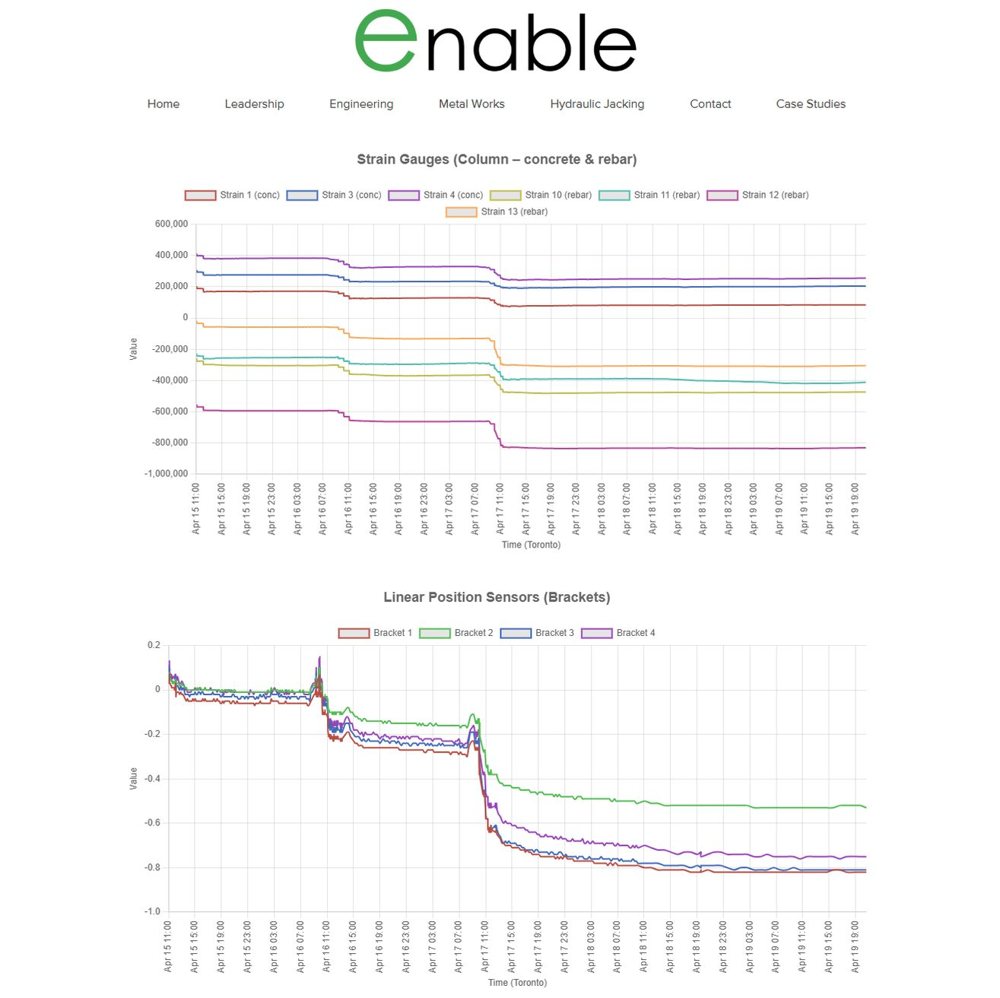
Partway through demolition, the readings showed the column picking up an unbalanced moment: slab framing had disengaged into the column. We worked out why, checked it with finite element analysis, rebalanced the four load points and carried on, with the residents still at home. Read the case study
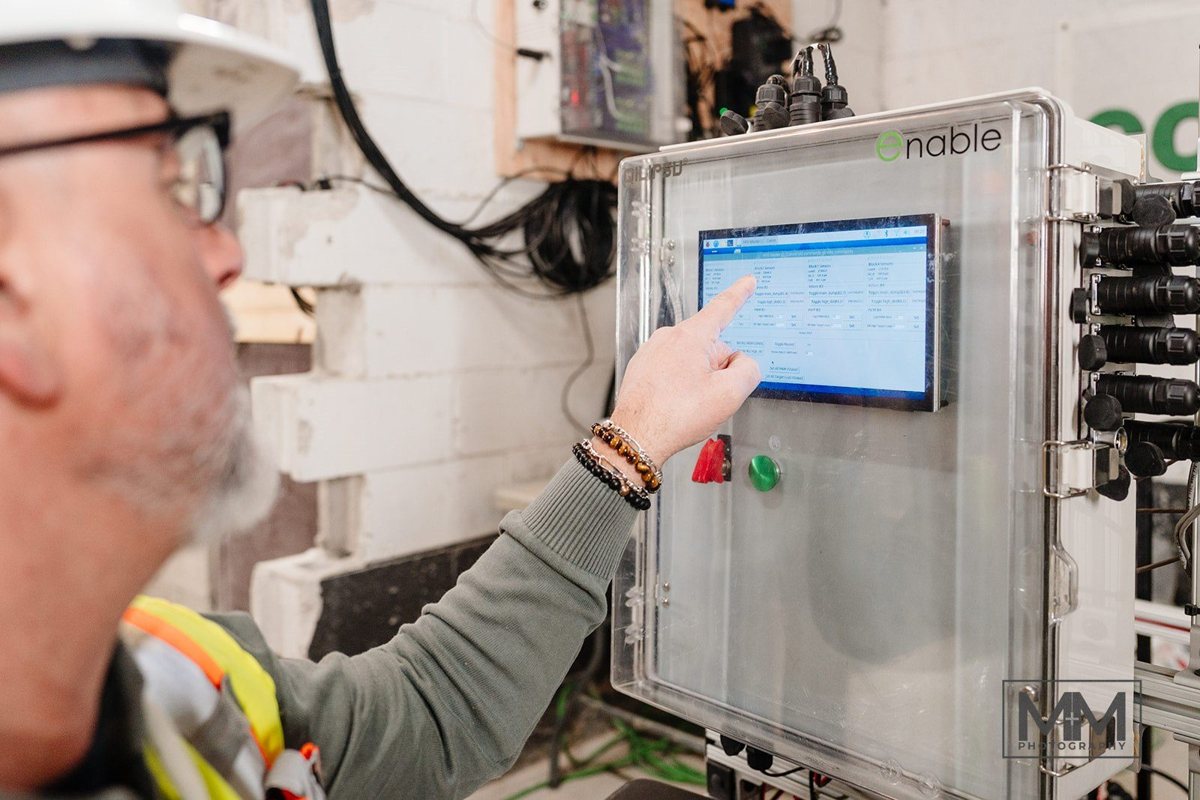
Every load cell and gauge is read every second, and anything outside a design limit is flagged as soon as it's read. The project team can watch the same live dashboard we do, and when the job is done the readings are the record.
Who carries what on the job.
If you're the contractor
We carry the temporary works design, the shoring and jacks, the load transfer, the monitoring and the hand-back. The demolition and the concrete normally stay with your crews. Send us the repair scope at tender, and the shoring goes into your price as a fixed number, not a contingency.
If you're the consulting engineer
Our professional engineers design the temporary works and are responsible for that design. We submit the drawings, calculations, jacking sequence and target load at every jack for your review. The movement limits you accept become the alarm thresholds on site, and you can watch the same live readings we do.
If you're the steel fabricator
We bring the shoring brackets, built to a scan of the column as it stands, plus the jacks and the monitoring. Your shop keeps the main steel package, and we never bid against you on a job you bring us. If something moves, the readings show where and when.
If you own or manage the building
In most cases the building stays in use while the column is repaired. Weigh that against the cost of moving tenants out. The readings give you a record of what the structure did during the work. Ask your consultant or contractor to bring us in, or call us first.
Where it pays, and where it doesn't.
- Column repair under occupied floorsThe work this method was built for, at 201 Jackson and 250 Heath.
- Beam and transfer girder replacementThe load is carried past the member while it's replaced.
- Removing a column for a new openingThe load is jacked onto the new framing before the column comes out, so the new beam is working from the start.
- Monitoring and load testing on their ownFor staged construction, critical pours, or a structure that has to carry a specified test load.
Is active shoring always the right answer?
No. Where the structure can tolerate some movement and the loads are modest, conventional shoring is often the better value. Active shoring earns its place when movement matters: occupied floors, brittle finishes, heavy loads, or a repair that has to take the load back.
One team from the scan to the hand-back.
-
Scan
The column and the structure around it are LiDAR-scanned, so the brackets and frames are built to what's there, not to the original drawings.
-
Engineer
Our professional engineers design the load path, the target load at every jack, the movement limits and the jacking sequence.
-
Install
The shoring steel goes in and is fitted up. Every sensor is zeroed and every jack checked before any load moves.
-
Transfer
Load comes off the column in stages. Each stage is held until the readings settle.
-
Repair
The damaged section comes out and is rebuilt. We hold the load and watch the readings the whole time, and adjust any load point if the structure does something unexpected.
-
Return and verify
The load goes back onto the repaired column, strain gauges confirm it's carrying it, and the shoring comes out. Monitoring can stay as long as it's needed.
Around the column, or through it.
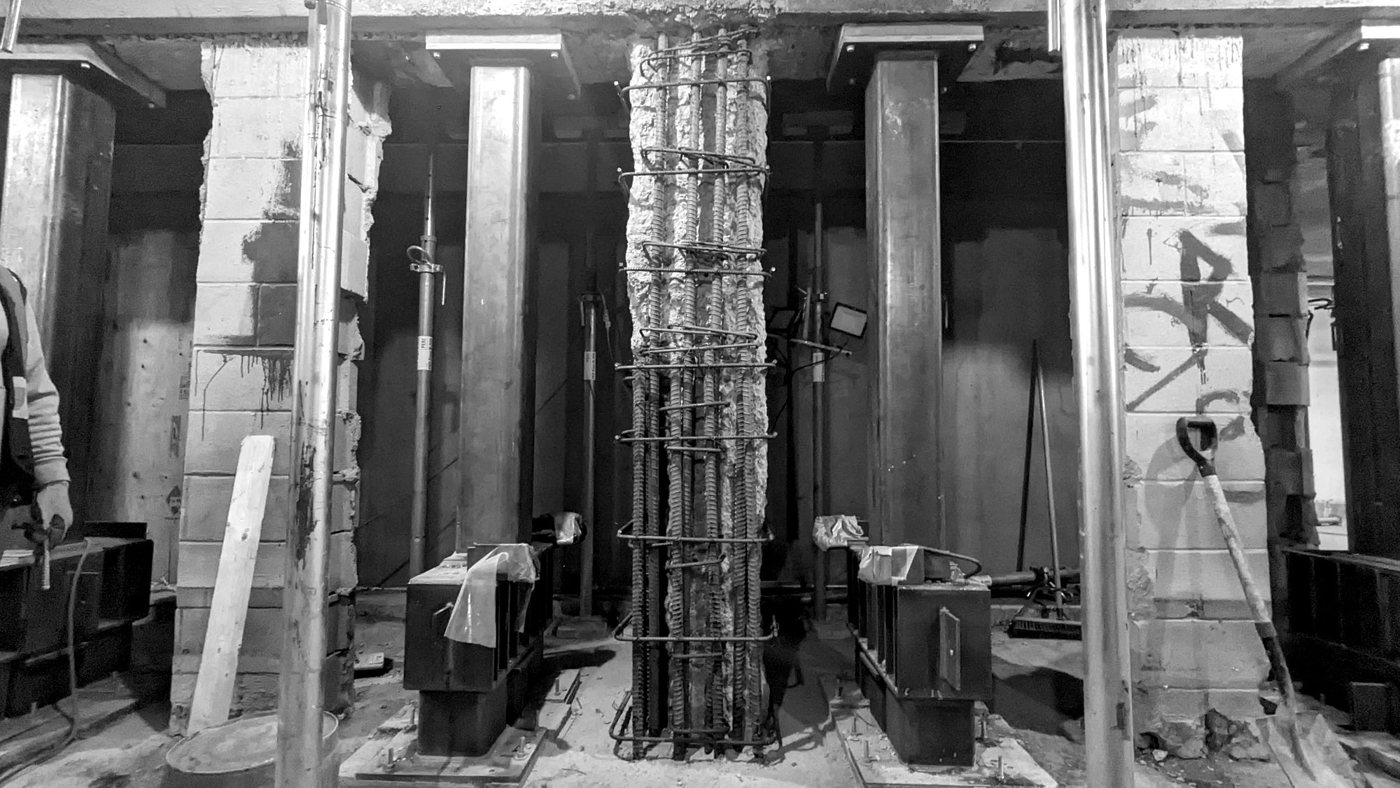
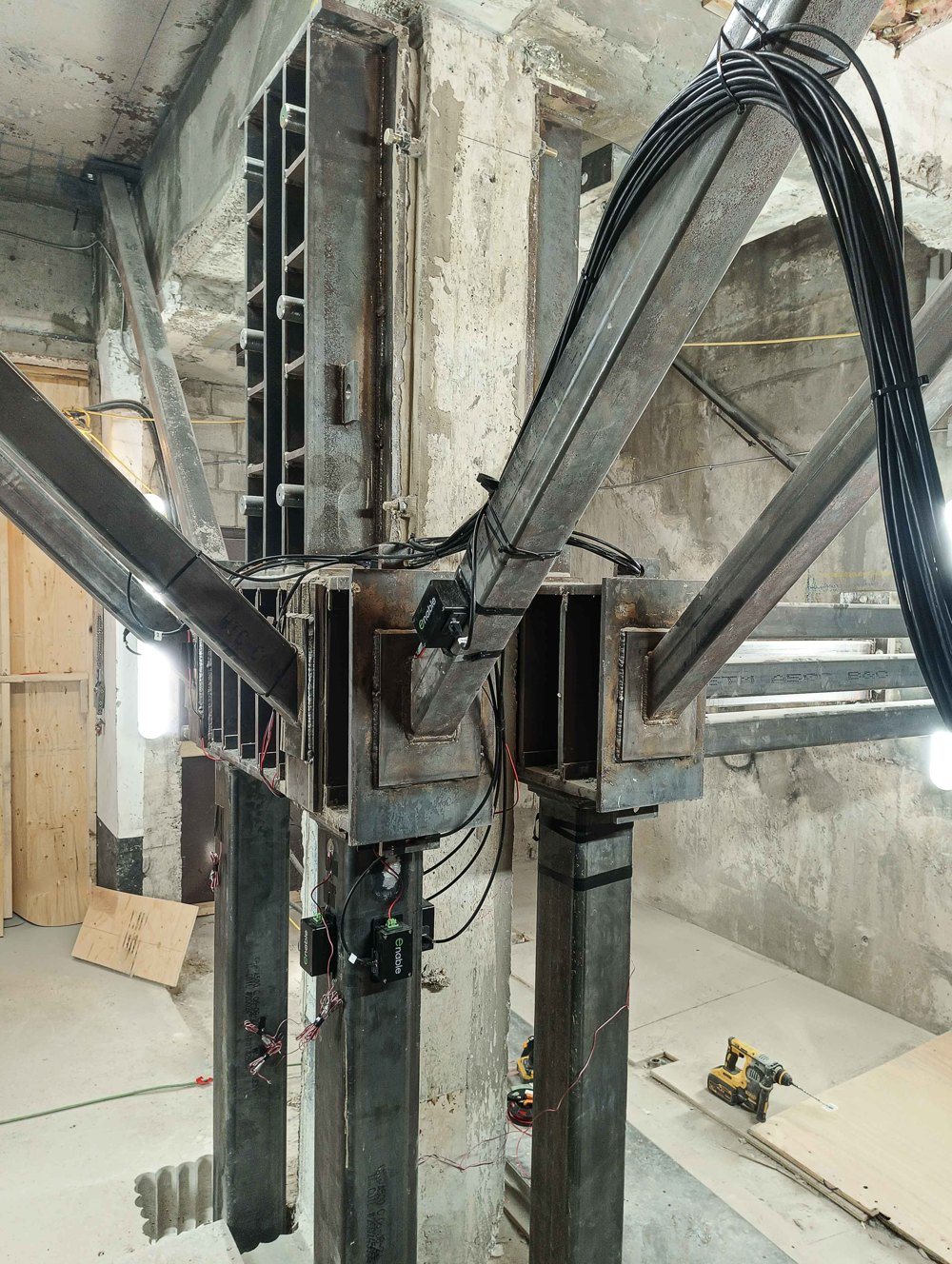
Every scheme is a temporary load path that carries the load past the part being repaired, with jacks where the load enters it. Which path depends on what's below to land on, how much room there is around the column, and how much of the column has to come out.
Have a column that can't come out of service?
Send us the drawings and the repair scope, or the consultant's repair details. We reply within one business day with a fixed quote or a short list of questions. There's no obligation. Call 647-250-7377 or email info@enable-inc.com.
Send us the drawings