
Case study · Lift & Fix · Two projects
Two occupied towers. We took the load off, rebuilt the columns, and put it back.
Two 18-storey apartment buildings in Ontario, each standing on failing columns, each full of residents. In Hamilton we carried the building around the damaged columns in steel. In Toronto we carried it through the column itself: 1,000,000 lb, monitored every second and streamed live. Nobody had to move out.
18 occupied storeys, twice.
Both buildings are 18-storey reinforced concrete apartment towers, and both stayed full while we worked. Residents were home and every floor carried its normal load. Both jobs were for Conterra Restoration, and both repairs had to fit around the people living above.
Where the load path was failing.
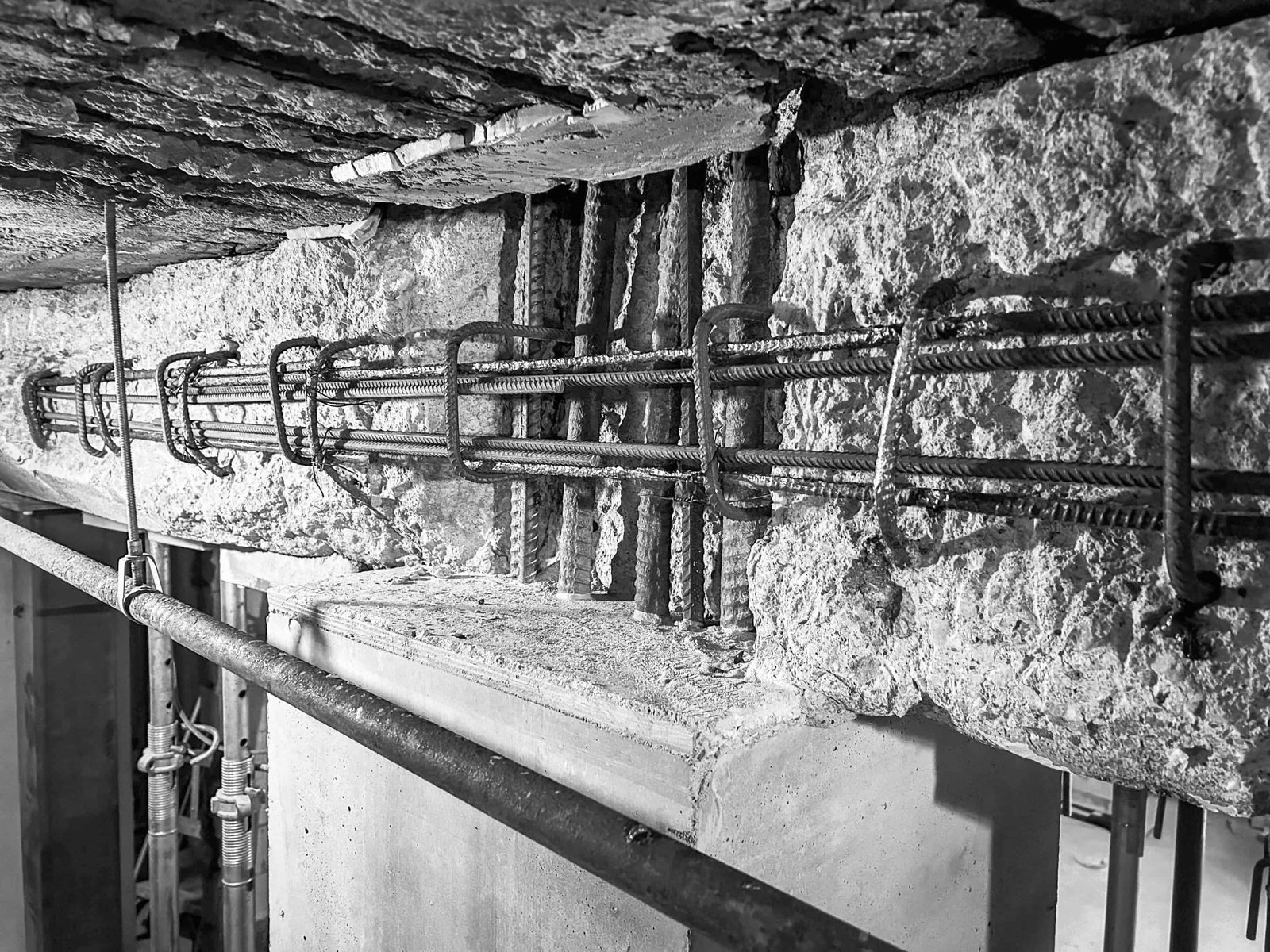
The usual fix doesn't take the load off.
Garage columns get full repairs all the time, because the slab above is easy to shore. Building columns usually don't. The standard approach is to remove the loose concrete and cast a jacket around what's left. The jacket protects the steel, but it doesn't share the load. The damaged column keeps carrying the building.
Both times, we took the load off instead. We just found a better way to do it the second time.
Path 1: around the column, in steel.
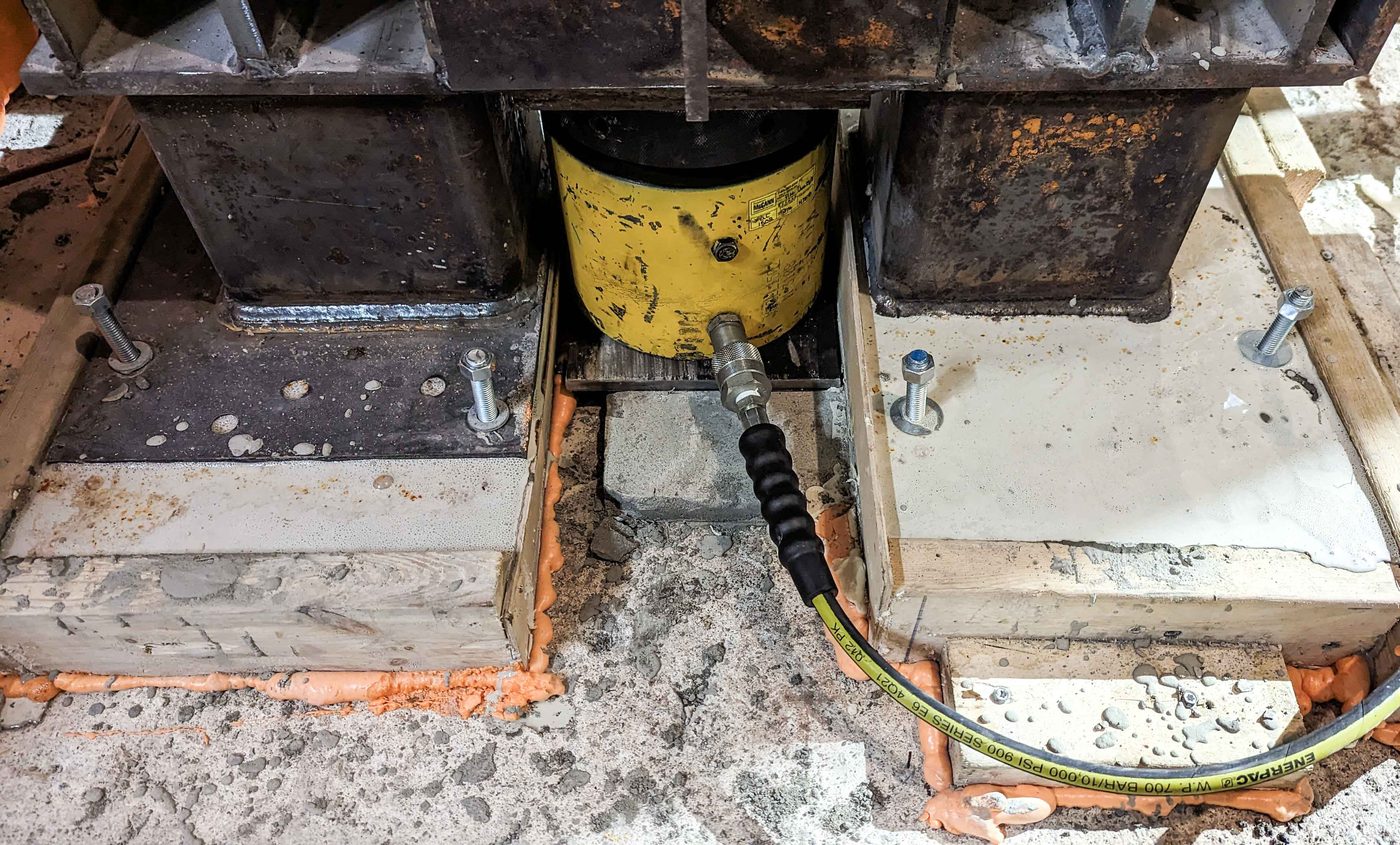
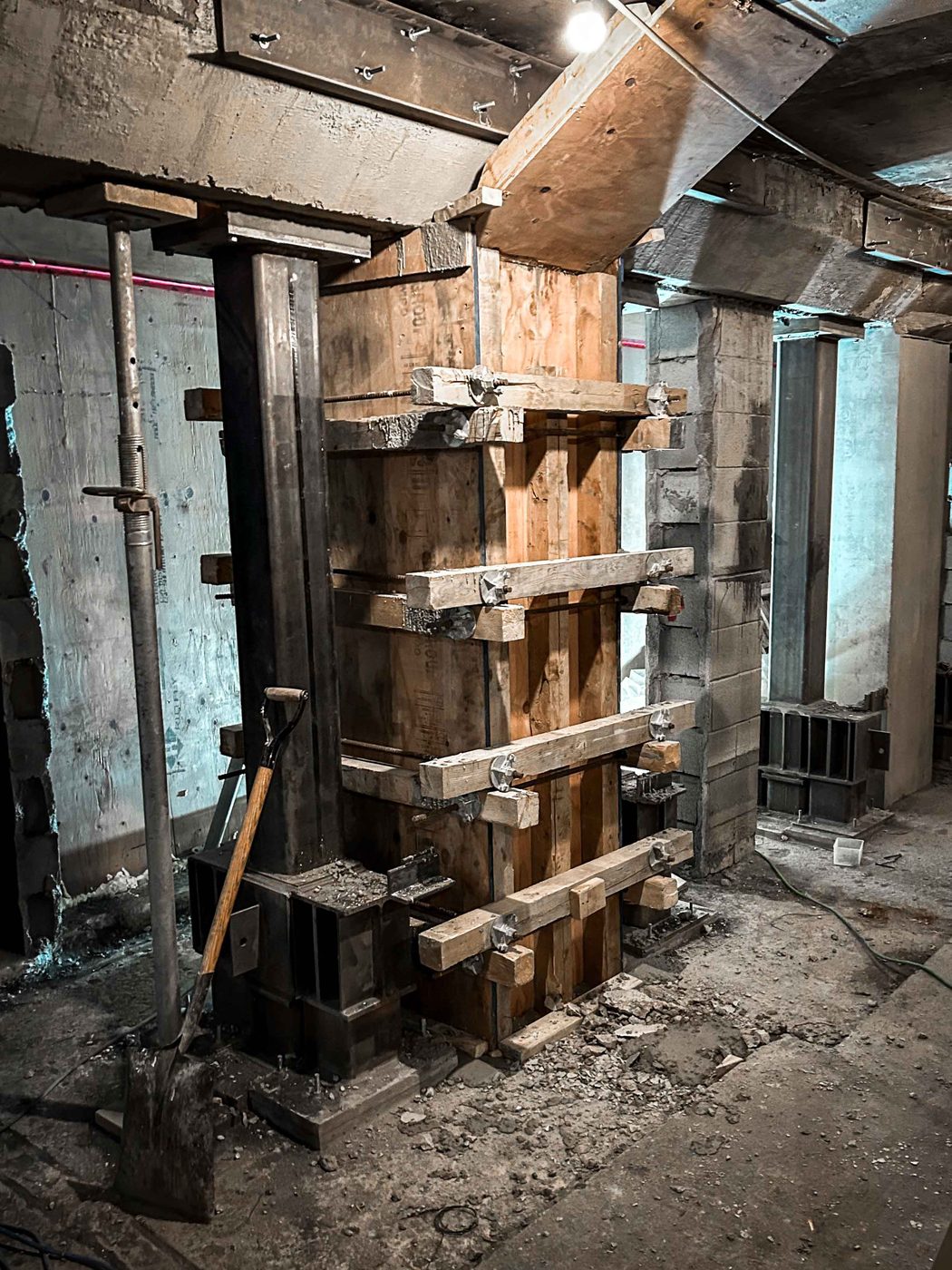
Three levels of heavy steel shoring frames, designed to carry the full weight of the structure above each column. Hydraulic cylinders built into the frames moved the load off the damaged columns slowly, in stages.
The lowest level bears over the building's strip footing, where all of the load ends up. It was the hardest installation on the job.
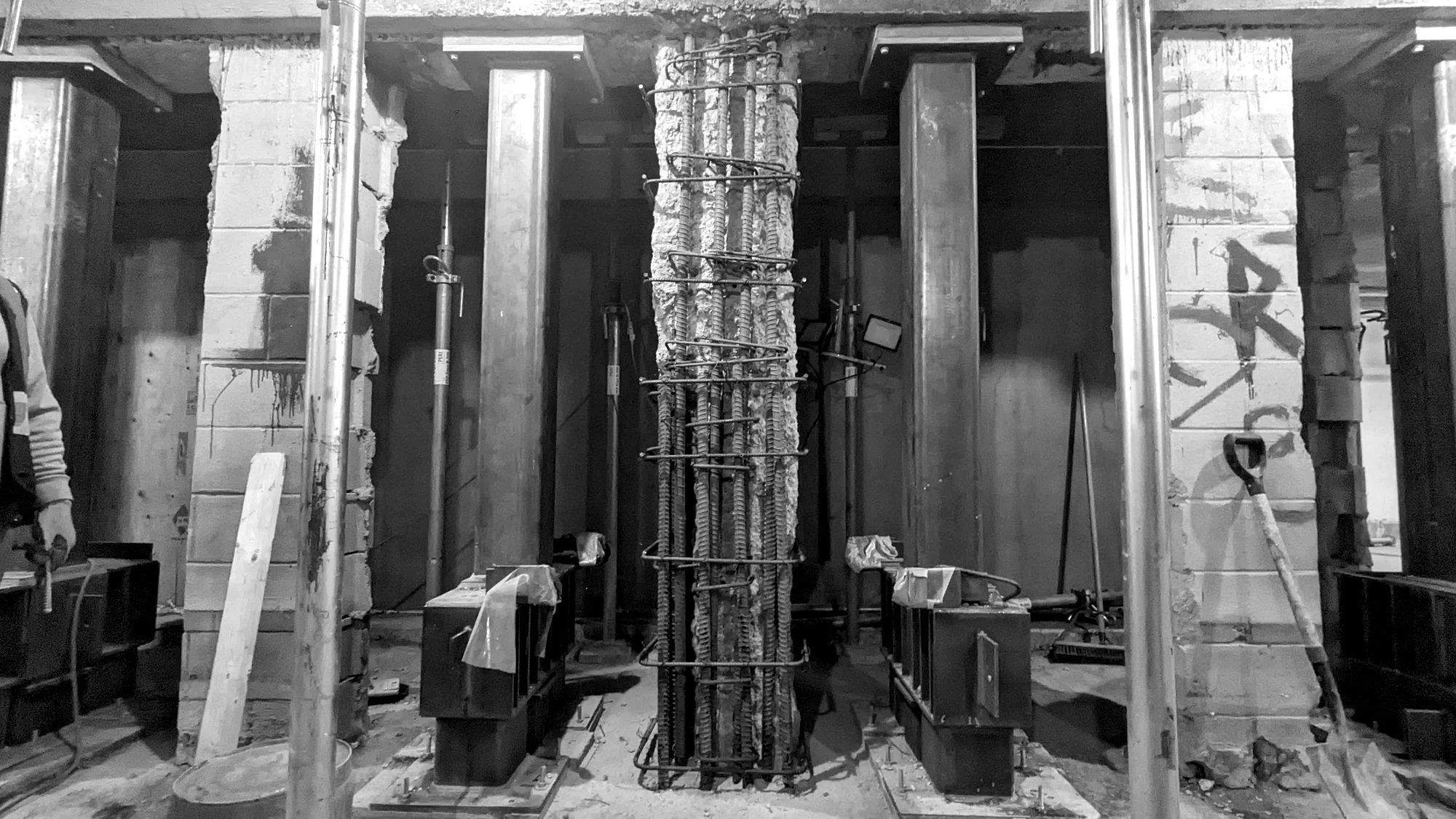
- Steel shoring postCarries the building past the column under repair.
- Existing columnStripped back to the reinforcing cage.
- Anchored post baseGrouted and bolted, with the hydraulics below.
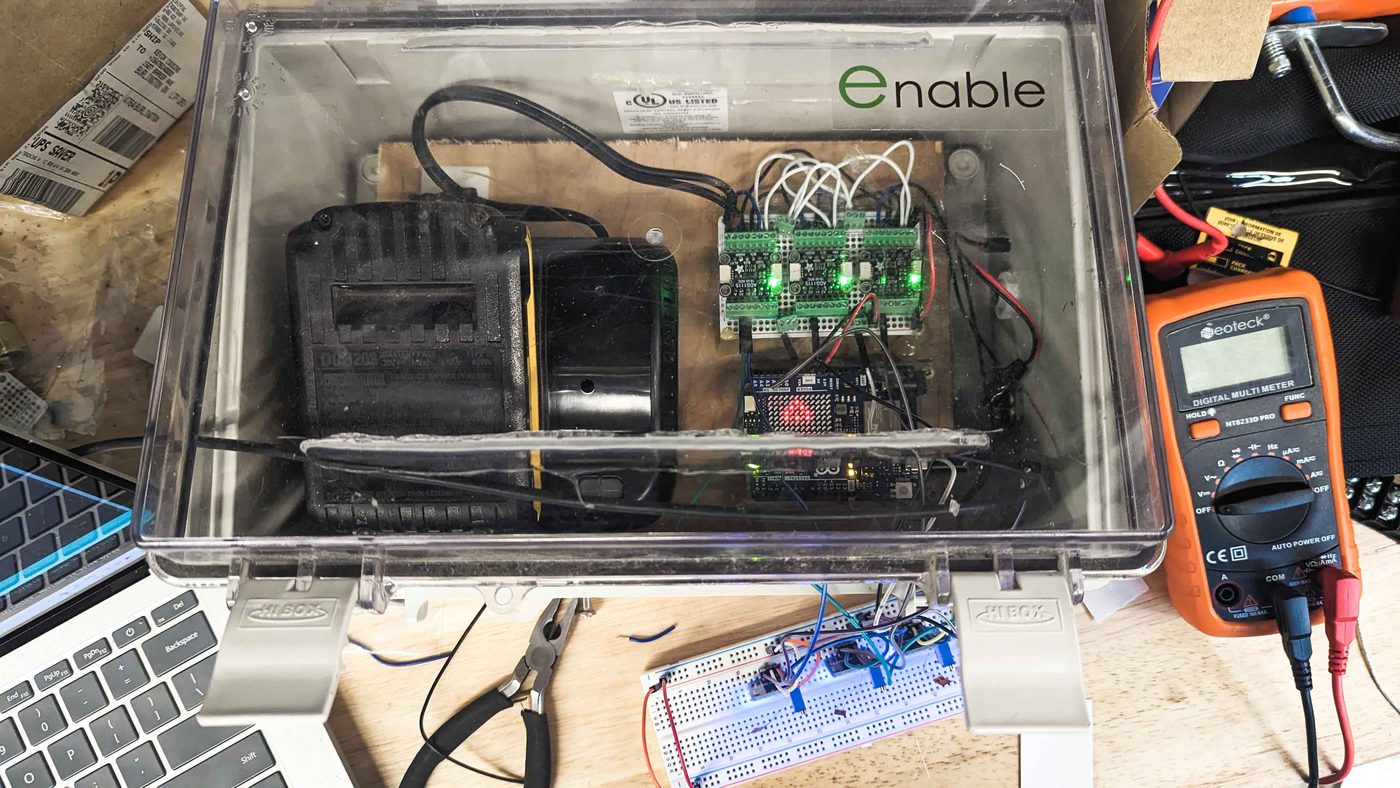
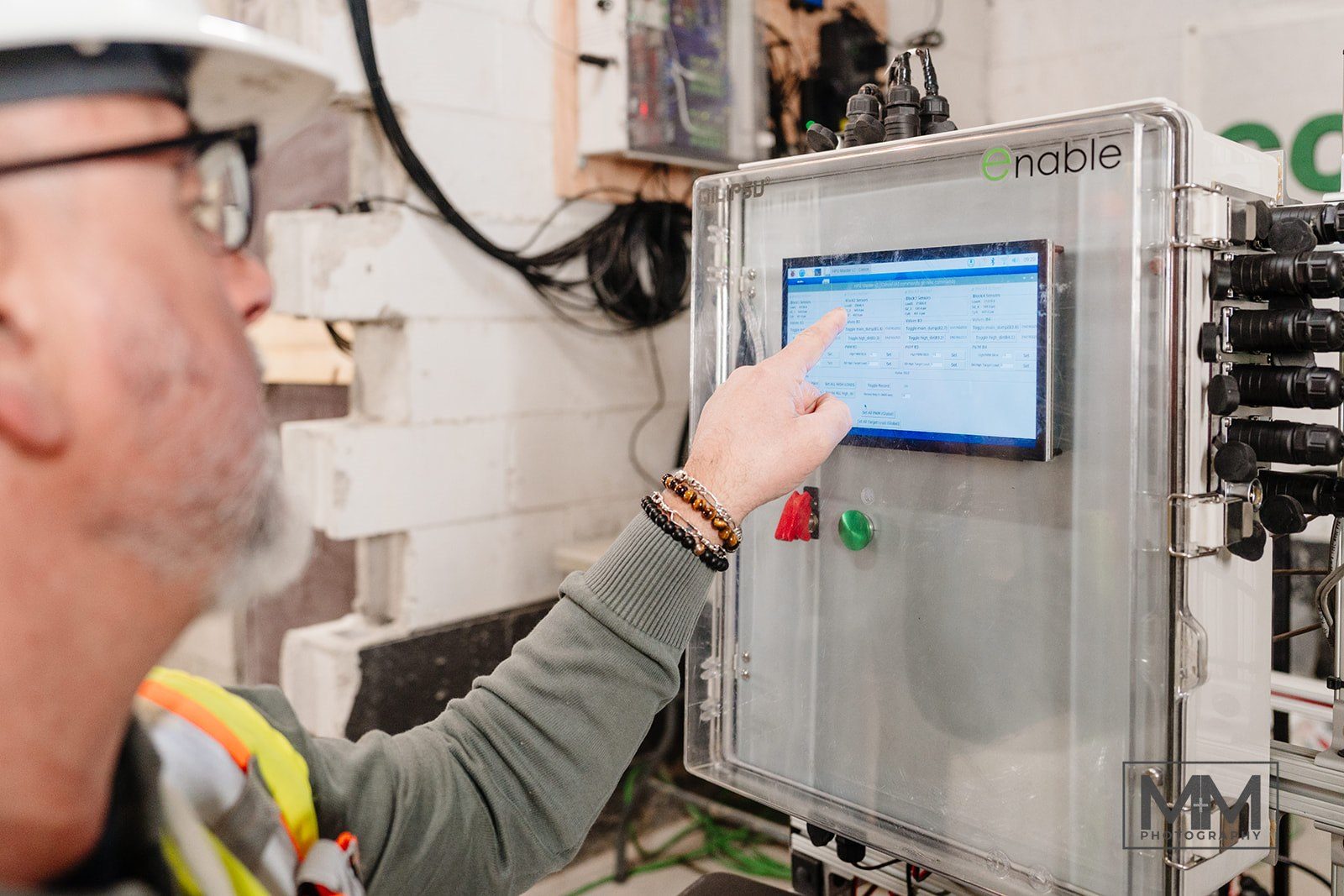
A custom data acquisition system read strain through the frames in real time. As load came off and went back on, the team could see it and adjust, step by step.
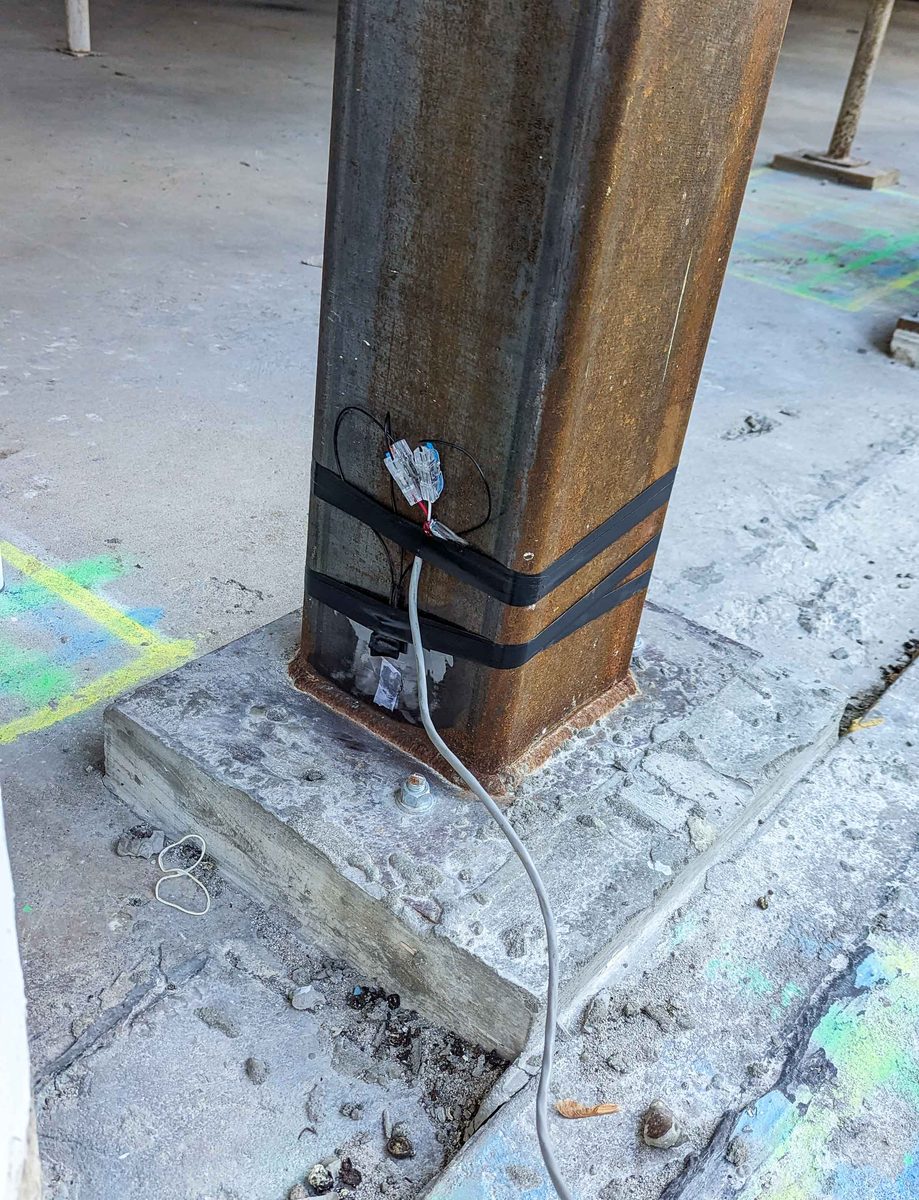
Rebuild, then give the load back.
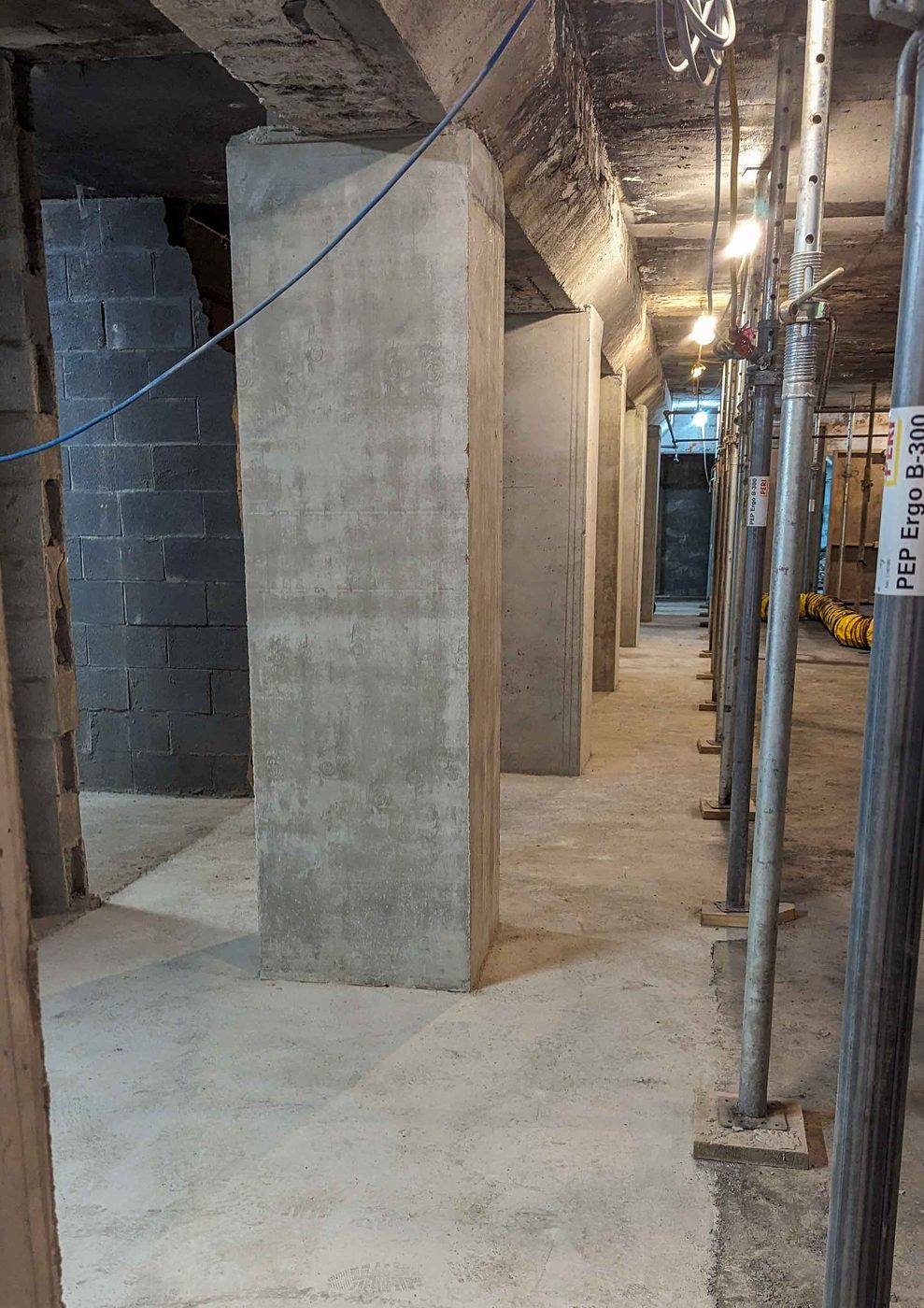
With the building on the steel, Conterra Restoration's crews cut the columns back to the reinforcing cage, formed them and re-poured. The load then came off the steel and back onto new concrete, under the same live monitoring.
Then we moved the load path inside the column.
At Jackson, the shoring carried the load from the slab down to the footing. At Heath, we kept the load in the column and bypassed only the section that needed repair: bracket to bracket.
Path 2: bracket to bracket, through the column.
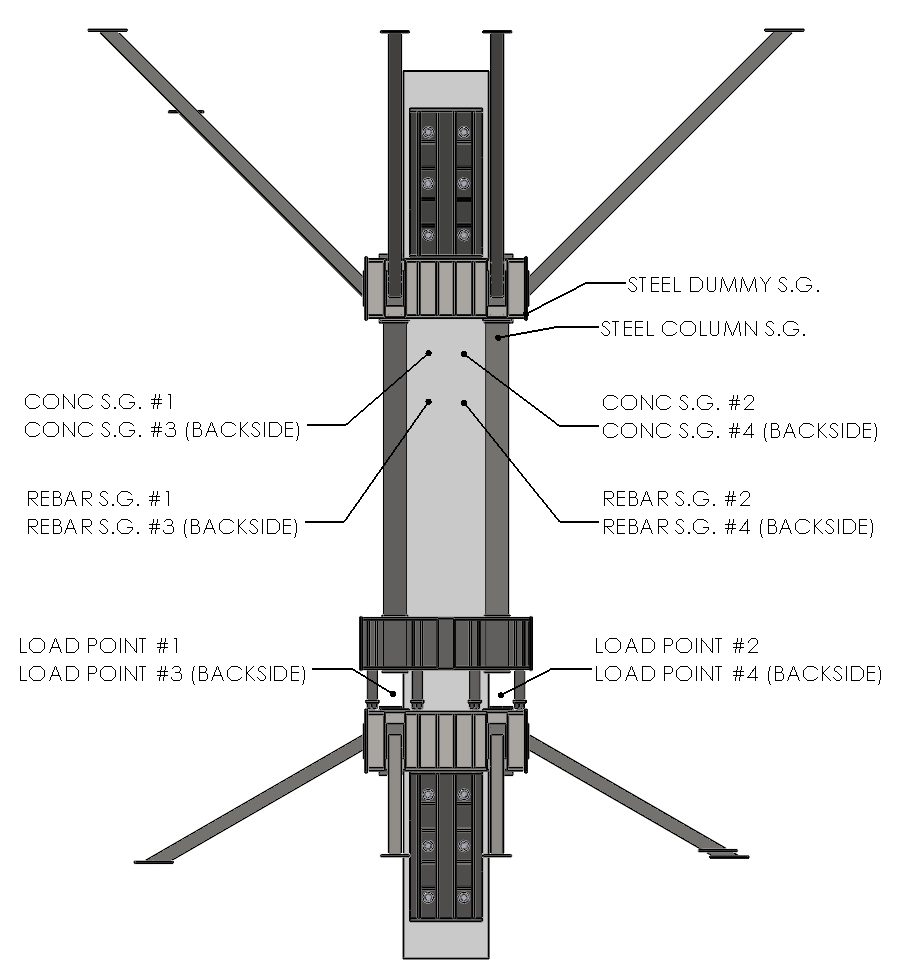
Steel brackets went in above and below the repair zone, each bolted through the column with six 2-in. high-strength alloy bolts grouted into the concrete. Four hydraulic load points between the brackets carried the building around the repair zone, leaving the concrete in between free to come out.
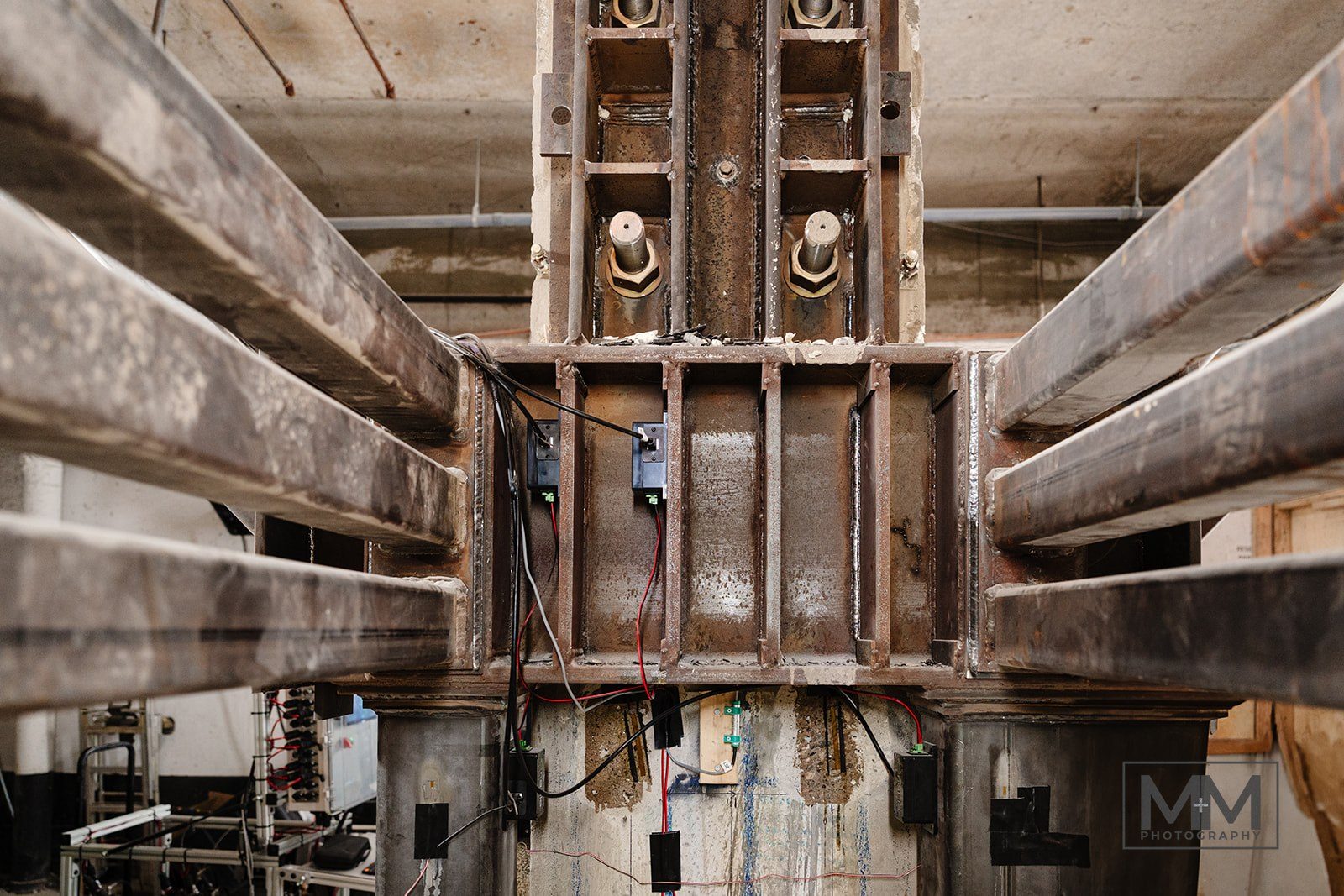
The hardest part came before any jacking. Each bolt sat in a cored hole larger than the bolt itself, yet had to land within 3/16 of an inch or the brackets wouldn't fit over them. We designed, tested and used custom grout manifolds. Each one held its bolt in exact position, sealed against the column face, and directed pumped grout around the bolt. Every bracket fit.
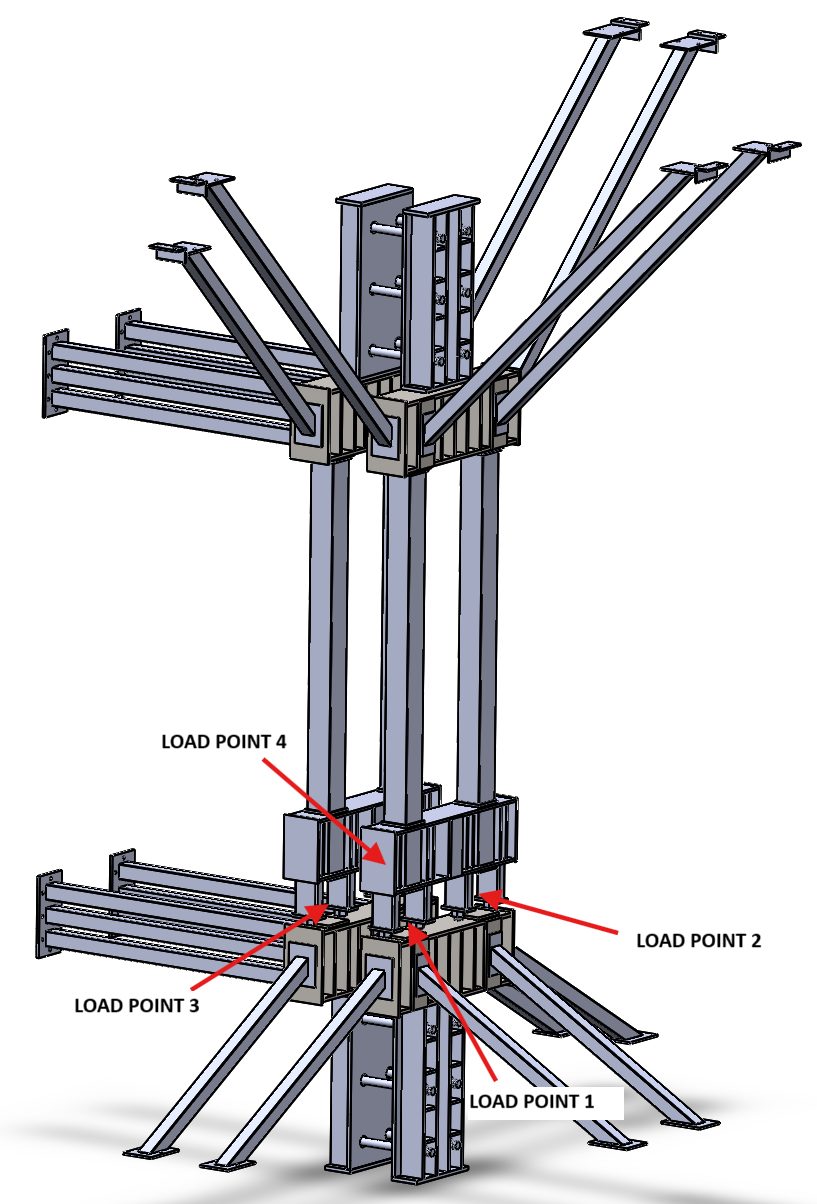
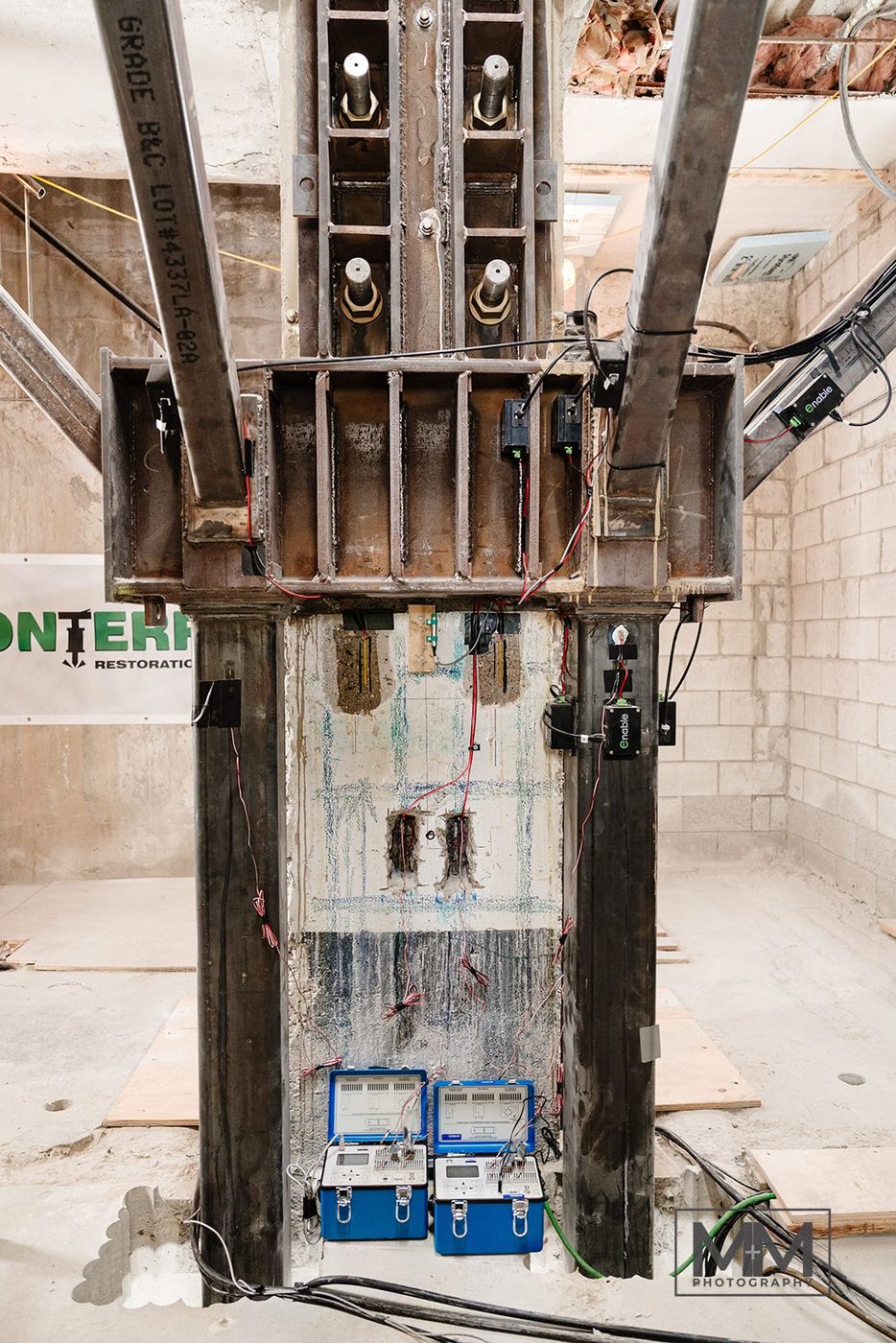
A million pounds off, in three stages.
We designed and built the hydraulic control system ourselves: custom valving, CNC-machined valve manifolds, pressure transducers, load cells and embedded microcontrollers regulating pressure and flow on every circuit.
Each stage held until the data showed the transfer was stable. Only then did demolition begin.
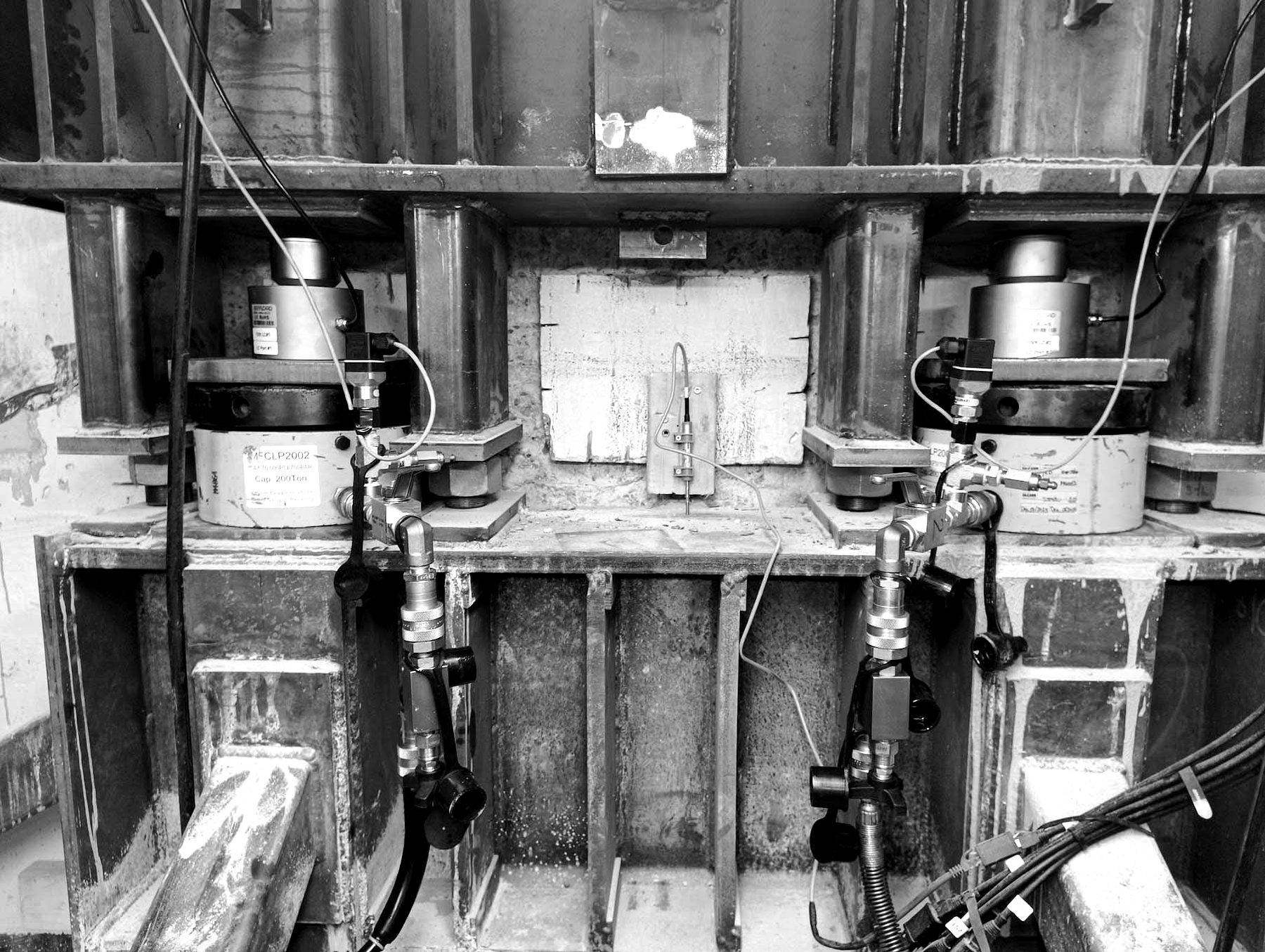
- Load cellReads the load at each point, every second.
- Hydraulic cylinderOne of four load points, each on its own circuit.
- Pressure transducerCircuit pressure, fed back to the controller.
- Position sensorTracks bracket movement against the column.
- Lower bracketBolted through the column below the repair zone.
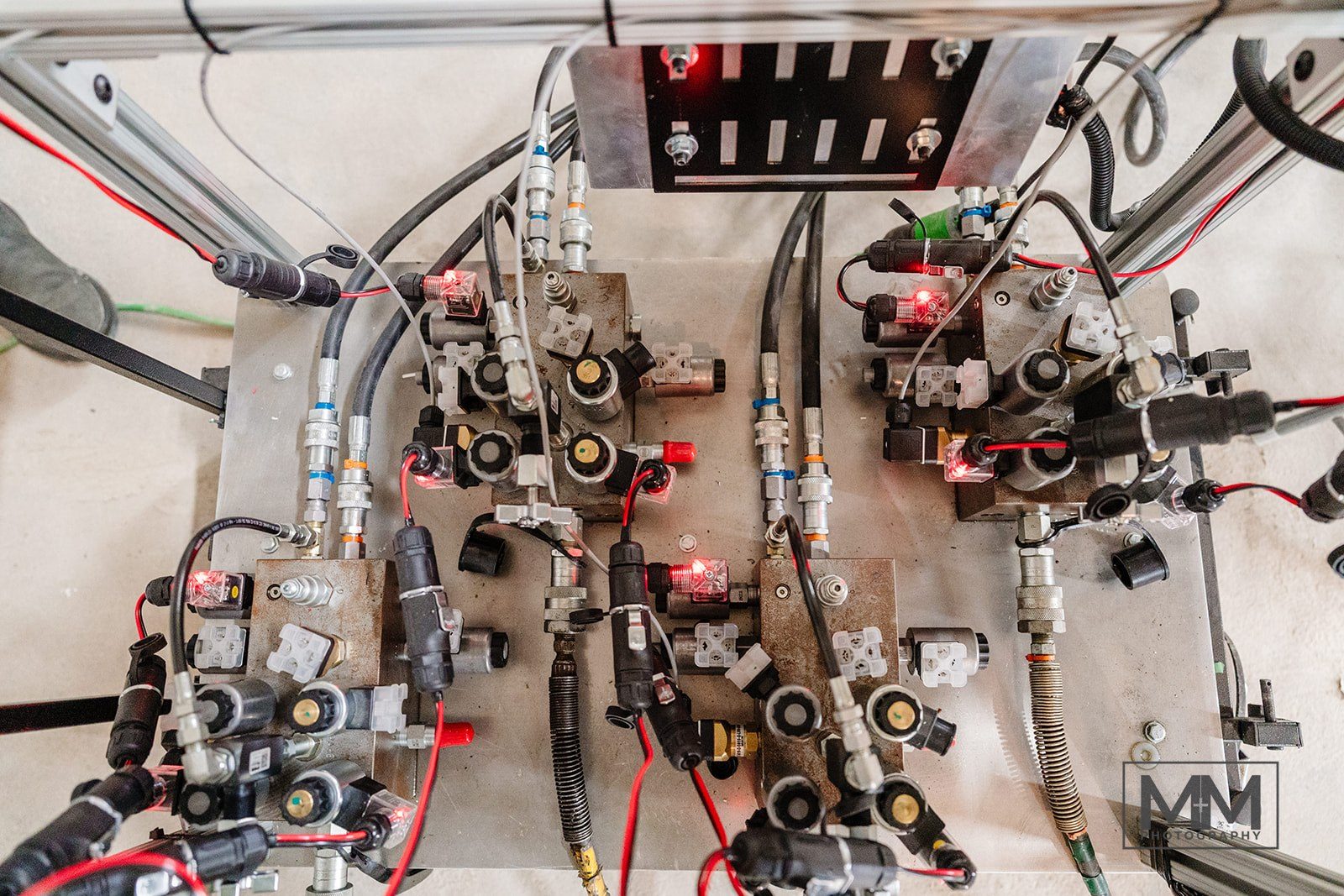
The monitoring earned its keep.
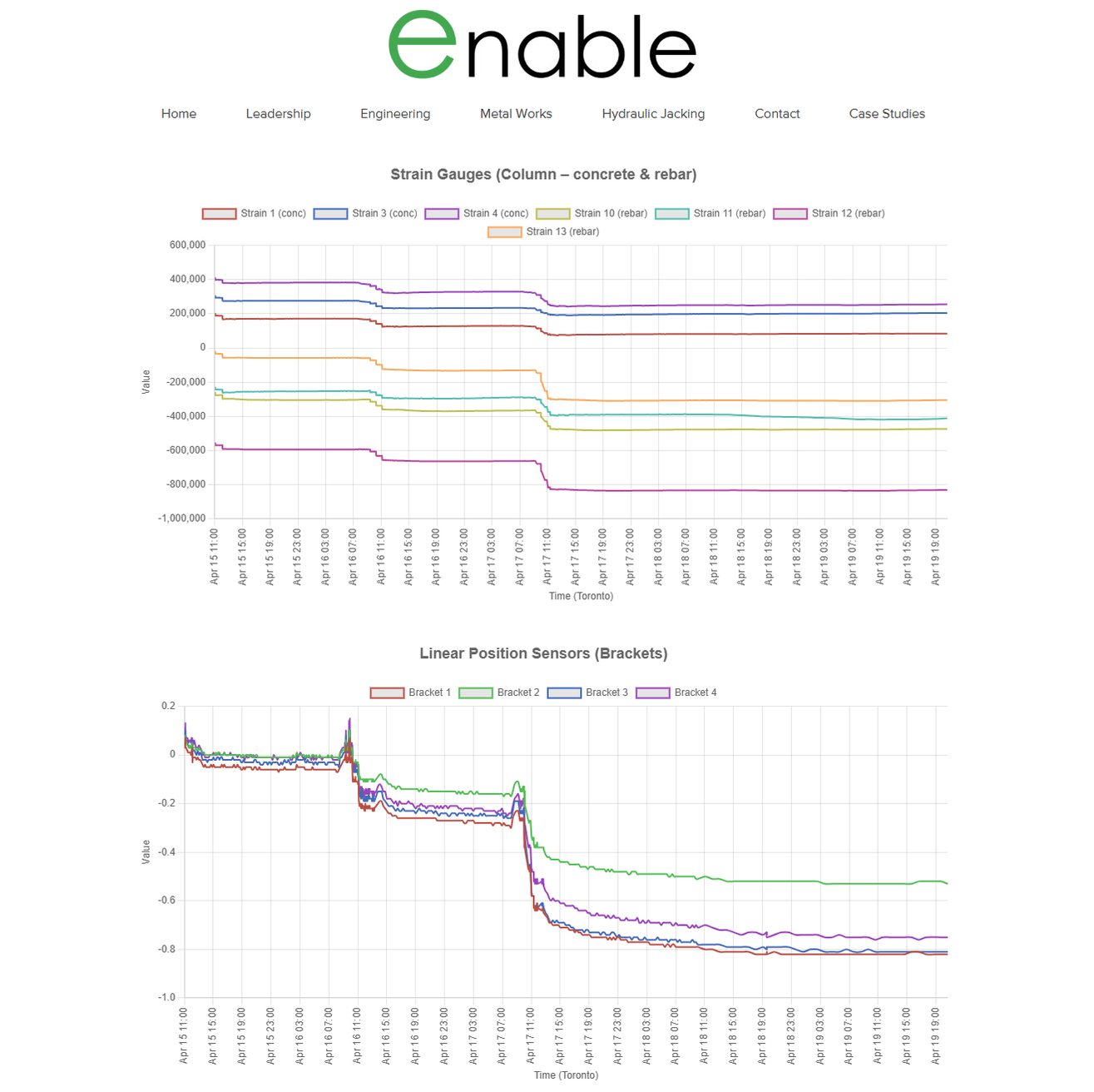
An Enable-built data acquisition system read up to 50 sensors every second and pushed the data to the cloud: strain gauges on the concrete, the existing rebar and the new steel, load cells at each load point, displacement sensors, and temperature and humidity.
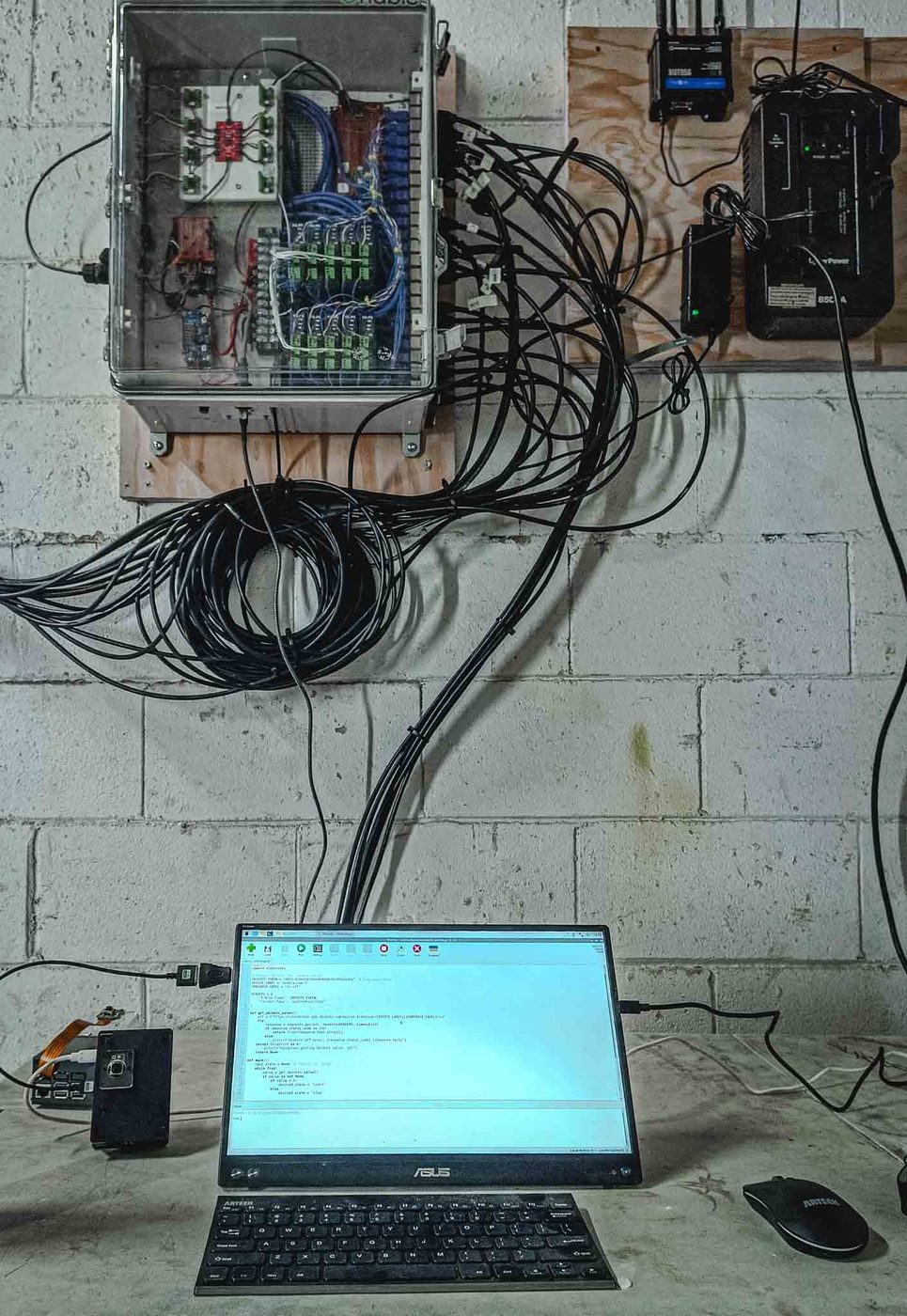
Partway through demolition, it caught something.
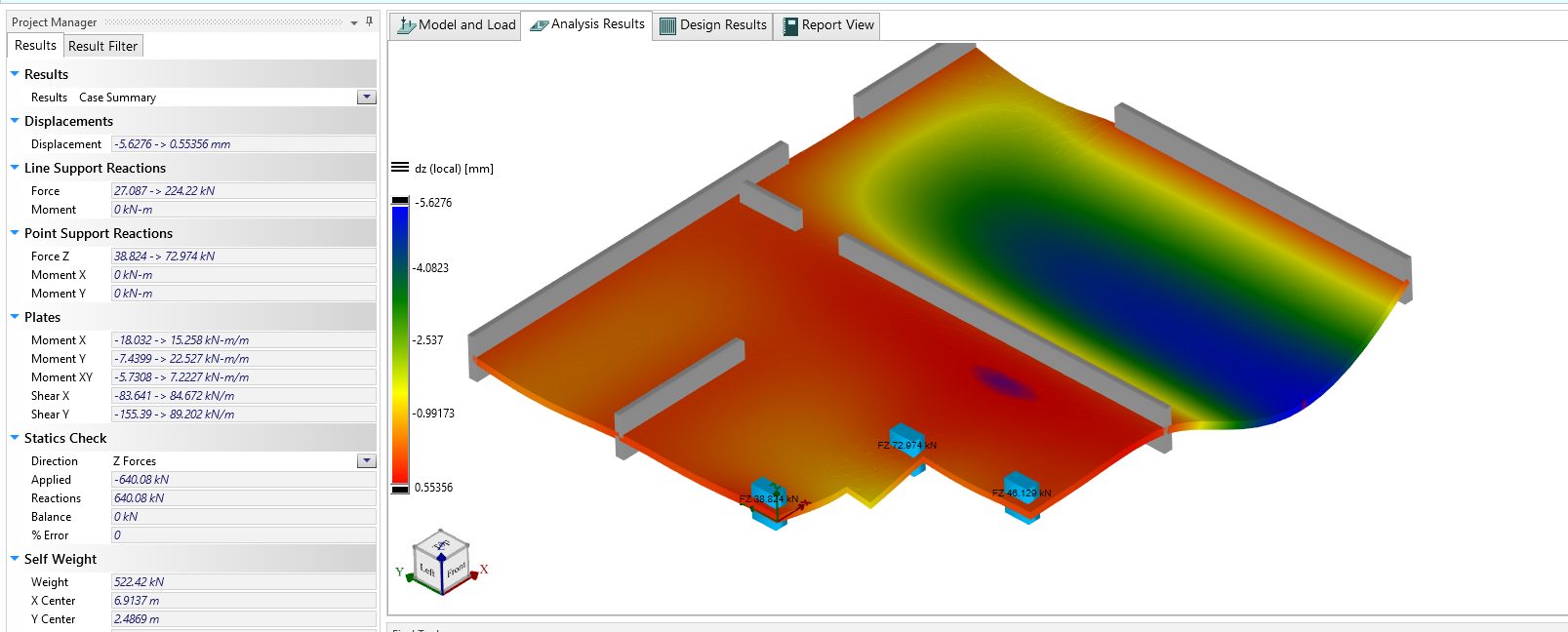
We worked out what had happened before going any further, rebalanced the load and carried on. That's what second-by-second monitoring is for.
Welding steel that was never meant to be welded.
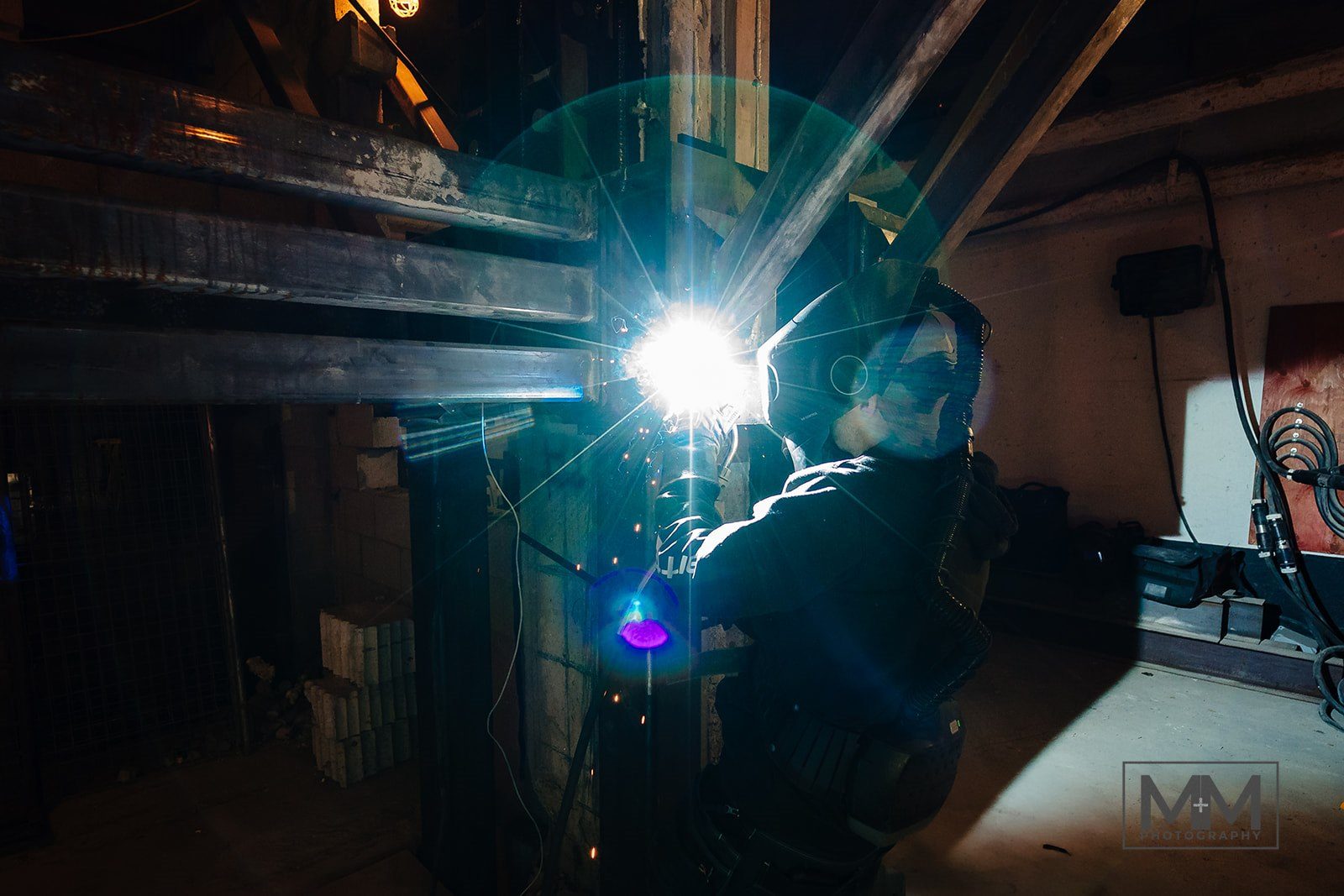
About 75% of the column was removed and replaced. Repairing the corroded bars meant field welding existing reinforcing steel that wasn't a weldable grade.
We developed our own procedure for it. Pulsed GMAW kept heat input down. Thermocouples mounted on the rebar confirmed preheat, and post-heat was held for four hours after each weld to drive hydrogen out of the steel.
Load back on new concrete.
At Jackson, the load came off the steel and back onto the re-poured columns under live monitoring. At Heath, the strain gauges confirmed the new concrete is carrying the building.
That's the difference from a jacket. Both repairs restored the load path instead of covering the damage.
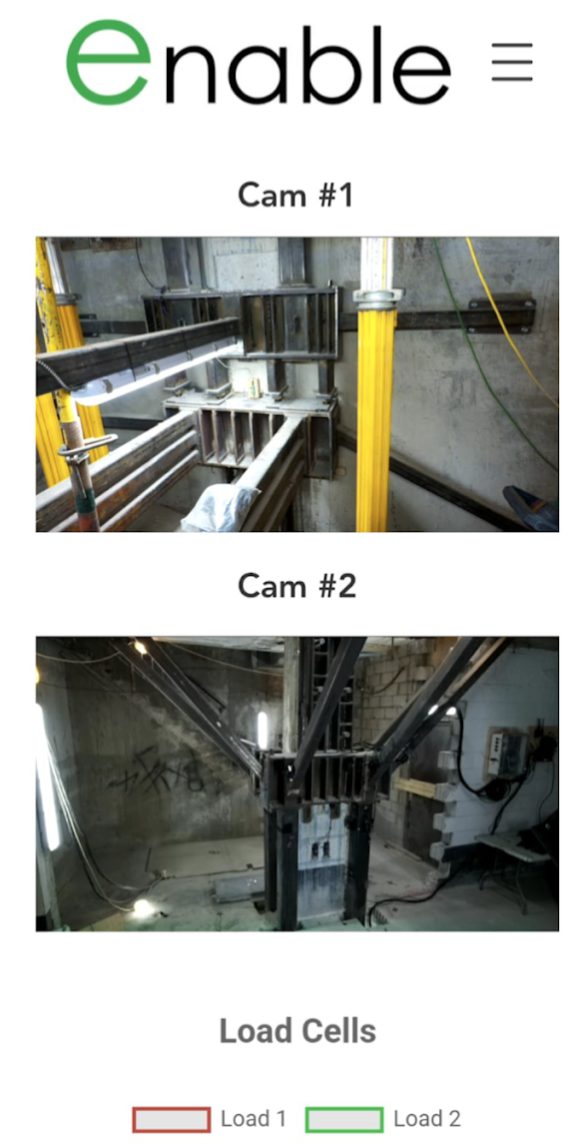
We streamed the whole job. Live video and sensor data ran on a public dashboard so anyone in the industry could watch a new way to repair building columns, one load step at a time.
Fifty sensor channels, read every second. Each stage of the lift shows up as a clean step in the strain and position data.
Load returned. Residents stayed. Twice.
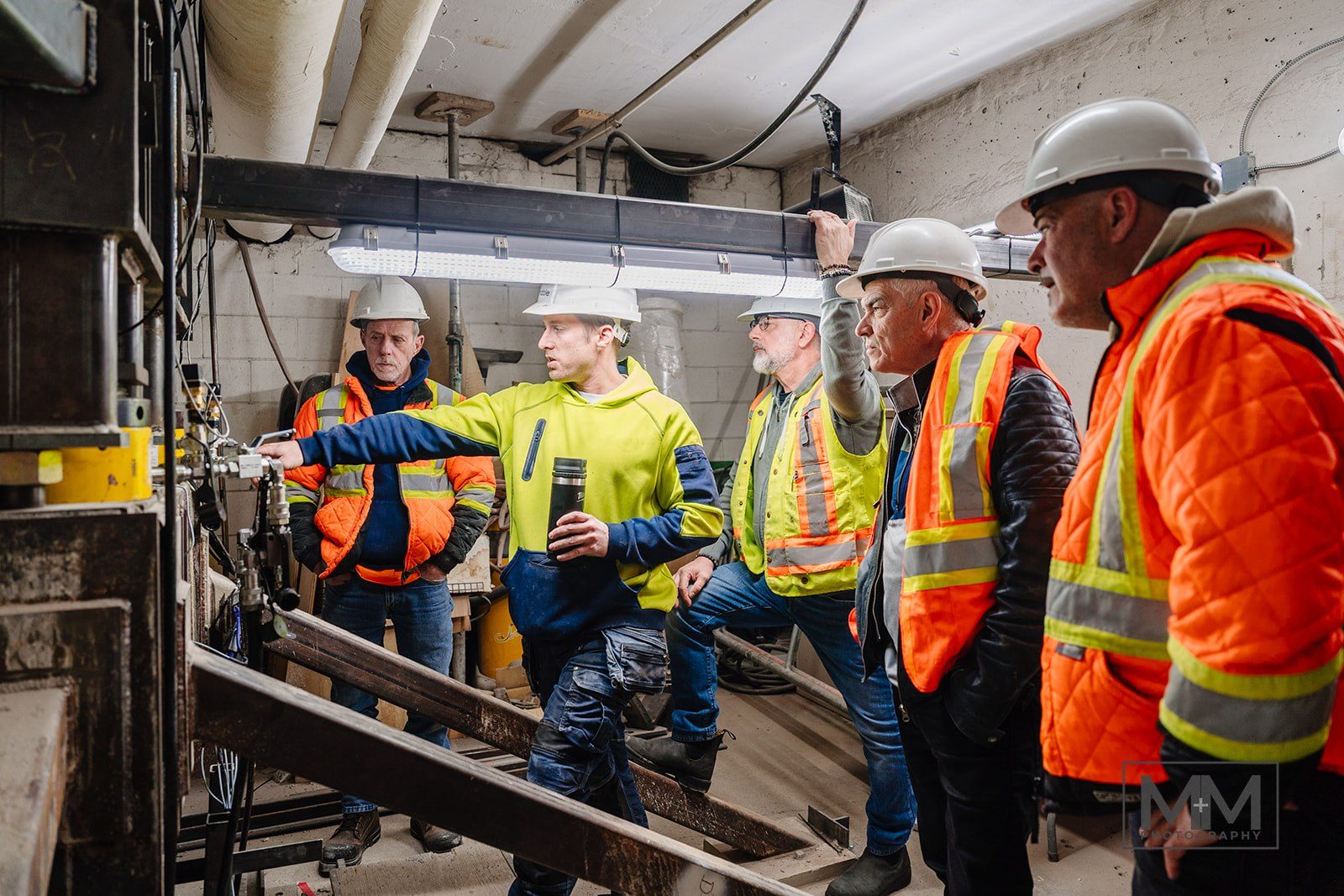
Project teams
Have a column that can't come out of service?
Call 647-250-7377 or email info@enable-inc.com.
How active shoring works